 CANADA
 USA
USA
 AUSTRALIA
 UK
UK

How to Choose the Right Accounting Outsourcing Partner: A Complete CPA Firm Checklist (2026)
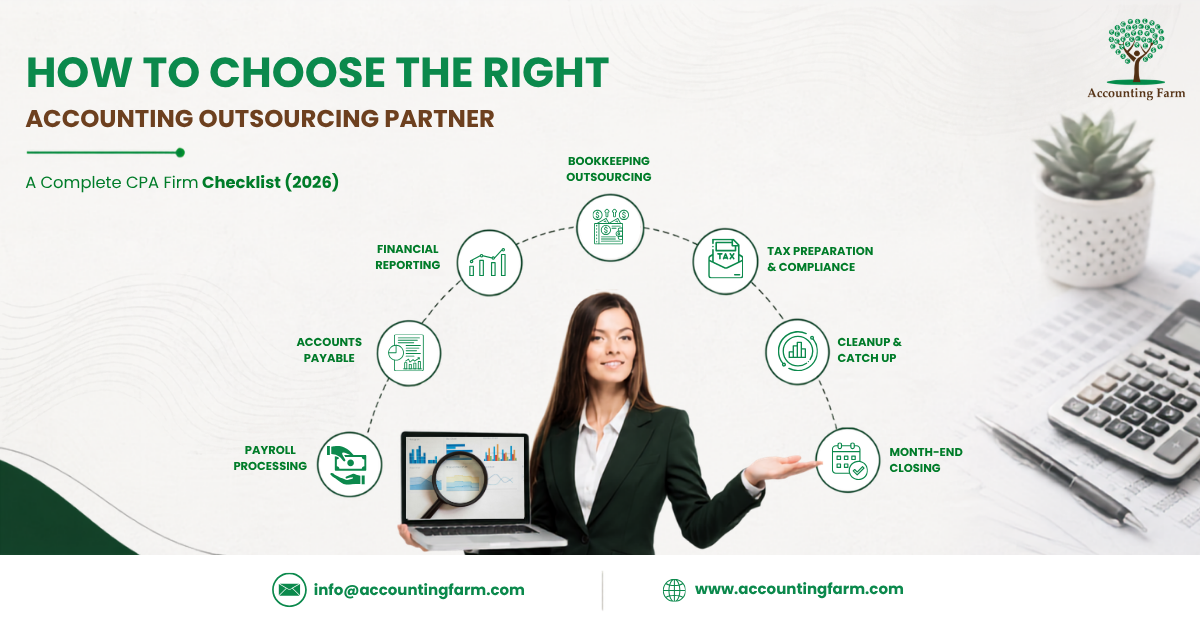
You’ve already made the decision to outsource that part is easy. Every CPA firm today knows outsourcing can cut costs by up to 60%, free up senior staff during tax season, and help firms scale without hiring. The hard part comes next: which outsourcing partner do you actually pick?
There’s no shortage of options from solo freelancers to large offshore firms and the difference in quality, security, and reliability between them is huge. Pick wrong, and you risk data breaches, missed deadlines, and clients losing trust in your firm. Pick right, and outsourcing becomes the single best growth decision your firm makes this year.
This checklist walks you through exactly what to evaluate before signing a contract with any accounting or bookkeeping outsourcing provider.
Why the Right Partner Matters More Than the Price?
Many firms make the mistake of choosing an outsourcing partner purely on hourly rate. But the cheapest option is rarely the best value. A partner that delivers inaccurate books, misses filing deadlines, or has weak data security can cost you far more in rework, penalties, and lost clients than you ever saved on hourly cost.
The right partner should function like an extension of your in-house team not just a vendor you email tasks to.
The 10-Point Accounting Outsourcing Partner Checklist
1. Data Security Standards
This should be your first question, not your last. Ask specifically:
Do they use encrypted, access-controlled systems?
Is physical office access restricted (biometric entry, CCTV, no personal devices)?
Do they sign a formal NDA and data protection agreement before onboarding?
If a provider can’t answer these clearly, that’s a red flag you’re handing over sensitive client financial data.
2. Software and Platform Expertise
Your outsourcing partner should already be fluent in the tools your firm runs on QuickBooks, Xero, NetSuite, Sage, Zoho Books, or whatever your stack is. Retraining a team on basic software usage wastes the time savings you’re outsourcing for in the first place.
3. Industry and Compliance Experience
Accounting rules differ by country and even by state or province. A partner working with US, Canadian, UK, and Australian CPA firms should understand region-specific compliance GAAP, CRA requirements, HMRC filing standards, or ATO guidelines not just general bookkeeping.
4. Transparent, Flexible Pricing
Look for a provider that offers both hourly and fixed monthly pricing, with no hidden charges for “extra” tasks. Transparent pricing is often a signal of a mature, established provider rather than a freelance setup.
5. Scalability
Your outsourcing needs during tax season are very different from the rest of the year. A good partner should be able to scale their team up or down with your workload without you having to recruit, train, or manage extra staff yourself.
6. Communication and Time Zone Overlap
Even if your outsourced team works remotely, you need real-time communication during your business hours. Ask about their standard response time, communication tools, and whether you get a dedicated point of contact rather than a rotating support queue.
7. Quality Control Process
Ask how they catch errors before the work reaches you. A reliable partner will have a review layer a senior accountant checking junior staff’s work built into their workflow, not just a single person handling everything end-to-end.
8. Proven Track Record and Testimonials
Look for case studies or client testimonials from firms similar in size to yours. A provider that’s worked with CPA and bookkeeping firms for years not months has already solved the onboarding mistakes a newer provider hasn’t discovered yet.
9. Trial Period Before Commitment
Any confident outsourcing partner should be comfortable starting with a short trial period a few days to a few weeks before you commit to a long-term contract. This lets you evaluate accuracy, communication, and turnaround time with real work, not just a sales pitch.
10. Cultural and Workflow Fit
Beyond technical skill, the team should adapt to your firm’s workflow, tools, and reporting style not force you to adapt to theirs. This is often the difference between a partner that feels like an extension of your team, and one that always feels like an outside vendor.
Red Flags to Watch For
Vague or evasive answers about data security
Pricing that seems too low compared to industry standards
No dedicated point of contact
Unwillingness to offer any trial period
No verifiable client references
Final Thoughts
Choosing an accounting outsourcing partner isn’t just a cost decision it’s a decision about who gets access to your clients’ financial data and who represents your firm’s accuracy and reliability. Run every provider you’re considering through this checklist before signing anything.
At Accounting Farm, we work with CPA, accounting, and bookkeeping firms across the US, Canada, UK, and Australia with strict data security protocols, Xero and QuickBooks certified experts, and a free trial period so you can evaluate the fit before committing.
Schedule a free consultation to see how our team fits into your firm’s workflow no obligation, no pressure.
Frequently Asked Questions
How much does accounting outsourcing typically cost?
Pricing varies by provider and scope of work, but most reputable providers offer both hourly and fixed monthly pricing models so firms can choose what fits their budget and workload.
Is it safe to outsource accounting and bookkeeping work?
Yes, as long as the provider follows strict data security protocols including encrypted systems, restricted physical access, and signed NDAs. Always verify these before onboarding.
Can I try an outsourcing partner before committing long-term?
Reputable providers typically offer a trial period, allowing you to evaluate accuracy, communication, and turnaround time before signing a long-term contract.
What’s the difference between hiring a freelancer and an outsourcing firm?
An outsourcing firm typically offers built-in quality control, backup staff for coverage during absences, and structured processes — reducing the single-point-of-failure risk that comes with hiring an individual freelancer.